adminhr@gsm-group.cn
Tel:021-63621983
 English
 中文
中文
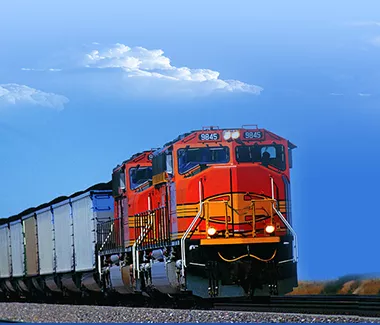
On May 11, the nation’s first “South Asia International Freight Train” departed from Lanzhou. Ten days later, this freight train, fully loaded with “Made in China” goods, will reach Kathmandu, the capital of Nepal, via rail and road transportation. This marks another important step for Lanzhou in the Belt and Road Initiative: following the launch of the “Lanzhou Express” freight trains to Central Asia and Europe, the city is further opening up its trade routes to the west and south.
Since the Belt and Road Initiative was proposed over two years ago, countries along the route have responded enthusiastically. Last year, China signed memorandums of understanding on jointly building the Belt and Road with more than 30 countries. Some of the major corridors under the Belt and Road framework have already begun to take shape, including the China-Mongolia-Russia Economic Corridor, the China-Indochina Peninsula Economic Corridor, the New Eurasian Continental Bridge Economic Corridor, the China-Central Asia-West Asia Corridor, the China-Pakistan Economic Corridor, and the Bangladesh-China-India-Myanmar Economic Corridor, many of which have already yielded promising results.
Taking the China-Europe corridor as an example, cargo transportation between China and Europe previously relied primarily on air, sea, and road transport. Air and road transport are costly, while sea transport is slow. With shorter transit distances, faster speed, high safety, and advantages such as reliability, environmental friendliness, and minimal impact from natural conditions, the China-Europe freight trains have become a backbone of overland international logistics.
The prospects for international freight are vast, offering extremely high cost-effectiveness. Traditionally, logistics trade between China and South and Southeast Asia relied mainly on sea transport. The launch of the new rail freight train opens up a new overland route, fully leveraging the advantages of rail transport. In the future, it is expected that railways will drive economic trade, goods flow, people-to-people exchange, cultural interaction, and technical cooperation among countries and cities, strengthening the “city effect” among nations. The development of the Belt and Road will thus build a cooperative system for mutual growth and shared development across the globe. With complementary technology and resource cooperation, rail transport will continue to advance, eventually paving the way for a global railway network.
Today, the Belt and Road Initiative has become a clear trend. Each new international railway line brings fresh development opportunities to countries and regions along its route. Industries should adopt innovative approaches to embrace this new era and work together for mutual benefit. By partnering with South Asian railways, our rail network continues to upgrade and accelerate. We firmly believe that the “South Asia International Freight Train” will become a flagship product of international freight under the Belt and Road strategy, driving shared economic growth and delivering benefits to people across the region.
 Download Brochure